Multilingual Content and Curriculum
Commission curricula, assessments, text, PDFs, videos and learning resources designed for your audience and languages.
Build learning content around your people, priorities and languages.
Learning design and delivery for businesses and governments
Create multilingual learning content and practical development programs around your organization's priorities. Combine self-paced learning on Potential.com's platform with hands-on workshops, facilitators and coaches who help people apply what they learn.
A sister company of Potential.comOnline learning powered by Potential.com
Prepare
A lesson at your own pace
Practice
A workshop built around doing
Apply
Something better at work
Our method
Learners build their understanding at their own pace before the live session. Facilitators then guide them through practical exercises, real situations and feedback. Follow-up assignments and coaching help them use the learning in their day-to-day work.
Learn at your pace
Learners complete self-paced text, video and resources on the Potential.com platform.
Practise with experts
Live time is used for cases, role-play, decisions and coached exercises — not a replay of the content.
Use it at work
Each learner tries a defined task at work with manager or coach support.
Three ways to work together
Each is a service you can buy on its own. Combined and maintained over a year, they become a managed academy.
Commission curricula, assessments, text, PDFs, videos and learning resources designed for your audience and languages.
Build learning content around your people, priorities and languages.
Bring online preparation, practical workshops and workplace application into one supported journey.
Prepare online. Practice together. Apply the learning at work.
Match your learning challenge with facilitators and coaches who support practice, reflection and improvement.
Bring experienced facilitators and coaches into the work your teams need to do.
The recurring combination of all three: a maintained curriculum, scheduled cohorts, language expansion, expert delivery and periodic outcome review.
The work
Video is one part of a learning package, and the format is a teaching decision before it is a design decision. Watch them here — 7 finished production samples in English and Arabic, nothing loaded from YouTube until you press play.
Production samples from the Potential.com group, shown here to demonstrate format and craft. They are not client case studies, and no learner results are claimed for them.
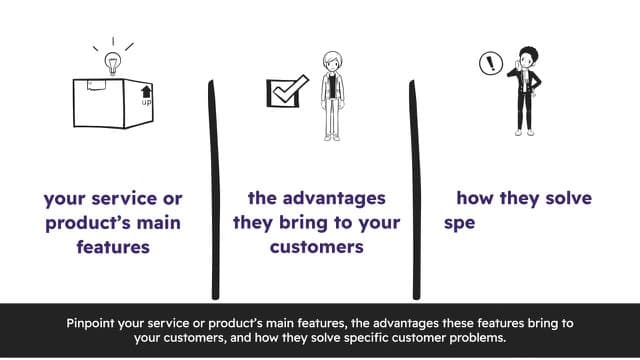
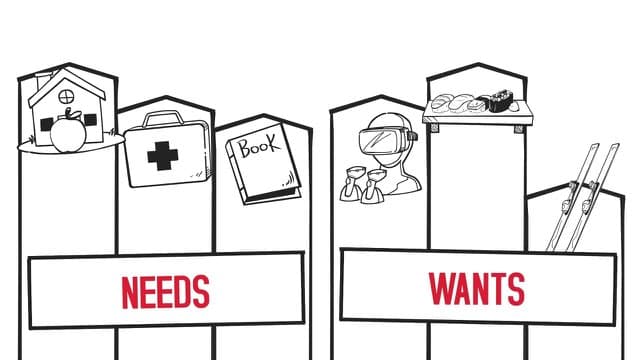
Monochrome line drawings with colour picked out in the on-screen type. Works well for breaking an abstract idea into two or three parts a learner has to hold in their head at once.
Suits marketing and sales programs · Sample 1 on YouTube
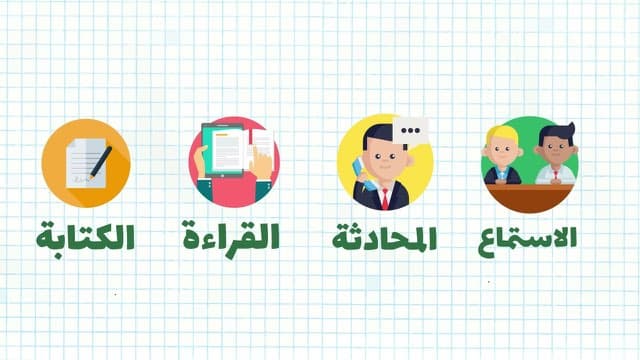
Built in Arabic, not subtitled into it: the type, the layout direction and the icon set are all composed right-to-left. This is what a genuinely localized asset looks like next to a translated one.
Suits customer service and operations programs · Sample 2 on YouTube
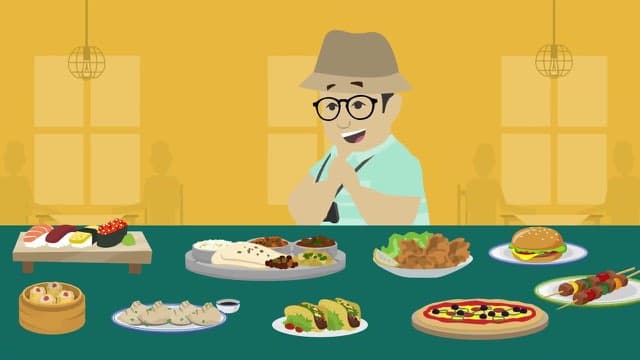
Full-colour scenes with recurring characters, for showing a situation rather than explaining a concept. The natural fit for a service interaction a learner will later role-play.
Suits customer service and sales programs · Sample 3 on YouTube
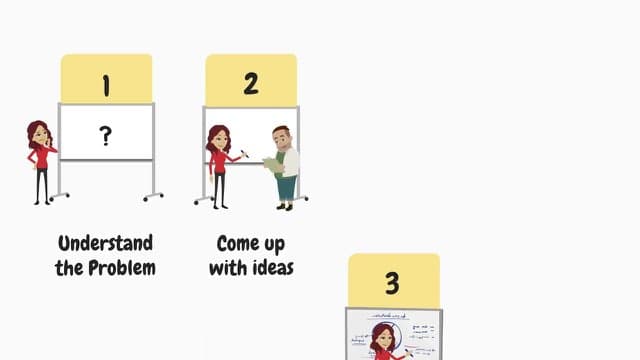
Each step lands as its own numbered panel and stays on screen as the next arrives. Useful when the learner has to remember an order of operations, not just an idea.
Suits operations and strategy programs · Sample 4 on YouTube
Heavy black line work with a single accent colour, built around setting two ideas against each other. Good for a distinction learners routinely get wrong.
Suits strategy and leadership programs · Sample 5 on YouTube
Filmed footage with narration and subtitles. Where a program is about a real place, a real service standard or real people, this carries more weight than any illustration.
Suits customer service and leadership programs · Sample 6 on YouTube
Rendered characters and lit interiors, in a regional setting. The most expensive register on this page — worth it for a flagship program opener, hard to justify for a routine lesson.
Suits leadership programs · Sample 7 on YouTube
A concept a learner keeps getting wrong needs a contrast. A sequence they have to perform in order needs numbered steps. A conversation they will role-play needs a scenario they can recognise. The style is a teaching decision before it is an aesthetic one.
Line illustration and motion graphics scale across a library. Filmed footage needs a location, a crew and a schedule. Rendered character work is the slowest to change once approved. We price these separately for that reason.
An asset composed in Arabic is not the same as an English asset with Arabic subtitles bolted on, and retrofitting the second into the first costs more than building both from the start.
Every one of these is preparation. On its own it can explain something; it cannot make anyone better at doing it. In a program, a video like these sits before a live session, and the session is where learners practise what the video described — which is the whole point of preparing online.
These samples demonstrate production style. Captions, transcripts and language variants are scoped per program — a subtitled video is not by itself a localized one. All 7 on YouTube.
Where this is going
These three are live, free and playable right now. Each one started as an ordinary course topic — starting a business, consultative selling, personal money — and became something a learner chooses to keep doing. We can build one around your topic.
Turn a passion into a business, and learn on the way.
The player picks something they care about — cars, baking, football, flowers, anything — and builds a business around it. Customers arrive, react to decisions and keep coming back or do not. The desk becomes a stall, the stall becomes a shop.
What the player practises
Authored customer encounters with AI follow-up conversation, one real-world step per chapter, and a reflection on what actually happened when the player tried it.
Play startupgame.meFree, no sign-up to start · Sales · Marketing · Strategy
Upload your own product. Sell it to a committee that pushes back.
The player uploads a real product or service, and the game builds a market around it: an ideal customer profile, five fictional companies worth different amounts of effort, and a buying committee with its own politics. Then they have to win it.
What the player practises
Prospect, pitch, discovery, objections, power map, committee. A generic seller loses. A pushy one is punished. Discovery questions are scored on what they surface, not on how many were asked.
Play salesgame.meFree, no sign-up to start · Sales · Strategy
Earn it. Spend it smart. Grow the rest.
The player lives from 16 to 25 at four decisions a year. A fad costs them. A phone depreciates. A loan on the wrong thing follows them for years. At the end they are compared against two characters who earned exactly the same money and handled it differently.
What the player practises
Consequences arrive years after the decision that caused them, which is the one thing a lecture about compounding cannot do.
Play wealthgame.meFree, no sign-up to start · Operations · Strategy
We start where any program starts: what should someone be able to do differently afterwards. The game is a delivery format for that answer, chosen the way we would choose a workshop or a video.
What makes these work is that a decision pays out later — a customer who does not come back, a buyer who closes down, a loan that is still there in year nine. A quiz cannot do that, and neither can a video.
AI characters that respond to what the learner actually said, scenario generation around the client's own product, and an anonymous measurement layer. The same engineering carries across topics.
A game earns its cost when judgement improves through repetition and delayed consequence. For a process someone needs to follow correctly on Monday, a job aid and a practice session are cheaper and work better. We will tell you which one you are looking at.
Tell us the capability and who has to build it. We will come back with the shape a game would take, what it would take to build, and whether we think it beats a workshop for your case.
Capability areas
Examples and materials adapt to a business or a government context: the situations, terminology and outputs change, while the learning objectives and assessment logic stay coherent.
Feedback, delegation, team management and leading change
Hands-on output: A practised conversation, a team charter or a development plan
Priorities, strategic choices, execution and performance review
Hands-on output: A strategy map, a priority plan or an execution review
Audience insight, positioning, campaigns and measurement
Hands-on output: A campaign brief, an audience proposition or a measurement plan
Discovery, qualification, proposals, negotiation and account planning
Hands-on output: A role-play, an account plan or an improved proposal
Enquiry handling, service recovery, empathy and escalation
Hands-on output: A service scenario response and an improved customer or citizen journey
Process mapping, problem solving, project execution and coordination
Hands-on output: A process map, an improvement experiment or an operating checklist
A complete journey
The curriculum map, a self-paced lesson, a captioned video, an assessment example, a facilitator exercise and the job aid the learner takes to work — one journey, end to end.
Where two languages are ready, you can compare the equivalent assets side by side. We never publish live assessment answer banks, private coaching material or client learner records.
Our flagship sample journey: a week of preparation, a half-day workshop built around practice, then a month of supported application at work.
A proposed sample journey prepared by Potential Courses. It is not a client case, and no learner results are claimed for it.
Consultants and facilitators
We bring in senior consultants to deliver in person. We match on capability area, sector, the languages a person can genuinely facilitate a complex session in, format and real availability — and every facilitator gets the objectives, the readiness findings and the rubrics before they deliver.
 Khaled AdasInstructional design and learning
 Dr Samer ShaarStrategy and leadership
 Ziad MatarTechnology and AI adoption
 Monika PapadopoulouMarketing and communications
Evidence
Our reports keep access, learning, demonstrated practice and use at work separate, with the denominator and the limits alongside the finding. A pre-post increase does not on its own establish that training caused a business result, and we will not present it as though it does.
Common questions
Start here
Tell us about the capability you want to build, the audience and the languages you need. We will help shape the content, practical interventions and support required.